
I saw my first client as an MFT trainee 20 years ago. When I applied to master’s programs after undergrad, I knew only one Asian American in the field—a college friend who graduated right before me and was the only reason I’d even heard of the MFT field. When I Yahoo-searched “marriage and family therapist,” I read whatever definition came up and knew immediately: this was my path. I was witnessing mental health challenges in my immigrant church community, a community I loved deeply, and I wanted to help. The systemic and relational nature of family therapy seemed like the only framework that could make sense of the cultural complexity of my world.
Through those early training years and the hours I logged toward licensure, I could count on one hand the number of Asian American and Pacific Islander (AAPI) clients I saw. I had no clinical supervisor who looked like me. I didn’t have language for what I was experiencing until years later, when I learned that Kenneth Hardy had named it: the “good, effective, mainstream minority (GEMM) therapist” (Hardy, 1991)—someone whose difference becomes an asset only insofar as it remains invisible and non-threatening. My well-meaning supervisors, trained in an earlier era, were fueling model minority expectations, and I was internalizing them. Externally, I was the GEMM. Internally, I was disconnected from myself, anxious, and wondering if something was wrong with me.
In the last two decades, I’ve presented at conferences, networked in countless rooms, and met students and colleagues who mirror my own path: we didn’t know anyone else in the field who looked like us, understood our communities, or saw us as people of interest or care. We were invisible. What saved me was my doctoral education. It gave me tools to hold my lived experience in conversation with critical contextual knowledge. As a second-generation Taiwanese American therapist, understanding myself through a third-order lens (McDowell et al., 2019) and contextual differentiation (ChenFeng, 2018) allowed me to grieve that isolation and, eventually, find my way back to myself—more whole and integrated.
A third-order lens invites us to see beyond individual behavior or family dynamics. It asks us to recognize how historical, cultural, institutional, and racial systems shape our identities and relationships. Contextual differentiation helps us distinguish what belongs to me and what belongs to these systems; perhaps anxiety might not signal something broken in me, but rather a context—a training program, a workplace, a field—that isn’t equipped to see and affirm me.
A Third Order Awareness of AAPI in the MFT Field
Engaging the world with a third-order lens isn’t only for our clients. It’s foundational to who we become as therapists—especially those of us with minoritized identities. It helps us understand our place within systems and how societal power dynamics shape not just our field, but our very selves as developing clinicians.
For AAPI therapists, our professional formation is inseparable from the broader history of AAPI identity development in the U.S.—the movements, migrations, crises, and organizing that have defined our communities over the past century.
Those Who Paved the Way
Asians have been in the United States since the sixteenth century (Filipino sailors; Lee, 2015), but the largest wave of immigration came with the passing of the 1965 Hart-Cellar Immigration Act that abolished race-based immigration quotas. That same year, Filipino American farmworkers, led by Larry Itliong, launched the agricultural strikes that would reshape labor organizing. Asian Americans whose families had arrived decades earlier were organizing against the systemic racism they faced daily.
The Asian American Movement—led by Yuji Ichioka and Emma Gee at UC Berkeley—coined the term “Asian American” in 1968. Their goal was to unite the diversity of Asian subgroups under one identity to fight systemic racism and demand political representation. That same spirit moved two Chinese American clinical psychologists and brothers, Derald Wing Sue and Stanley Sue, who drew inspiration from the Association of Black Psychologists. In 1972, they co-founded the Asian American Psychological Association (AAPA). Their early work—including one of the first academic articles on AAPI mental health—reshaped how mental health training approached culture. Our field changed because of them.
In the late 1970s, as civil wars and genocide swept Southeast Asia leading to the displacement and resettling of refugees in the U.S., our field gained another pioneer: Insoo Kim Berg. Born in Seoul, she came to the U.S. to study social work and went on to co-found Solution-Focused Brief Therapy (SFBT) with Steve de Shazer at the Brief Family Therapy Center in Milwaukee in 1978. We may never know what cultural influences shaped her theory, but the alignment between SFBT’s pragmatism and the values embedded in many Asian cultures invites us to recognize AAPI contributions to our field—even when they’re not explicitly named (Cheung & Jahn, 2017).
In 1981, the Sue brothers published Counseling the Culturally Different (Sue & Sue, 1981), which became one of the most widely used multicultural counseling textbooks and transformed how clinicians are trained. That same decade, Vincent Chin, a Chinese American, was murdered in Detroit by white autoworkers who mistook him for being Japanese. The killing galvanized AAPI communities and the work of AAPI scholars and clinicians who followed.
Hong Kong-born Man Keung Ho, a professor of social work at the University of Oklahoma, published Family Therapy with Ethnic Minorities in 1987—a text that would eventually land in my own master’s-level MFT courses. Over the next decade, Insoo Kim Berg authored one of the first JMFT articles on adapting family therapy practice for Asian American clients (Berg & Jaya, 1993). A few subsequent articles followed, each one geared toward training a largely white therapist population in cultural competence with Asian American clients. The work was
necessary, but it positioned AAPI therapists as educators of white colleagues rather than as full participants in the field’s development.
After the 9/11 attacks in 2001, a new wave of anti-South Asian racism targeted Sikhs, Muslims, Hindus, and their communities. Within years, Mudita Rastogi, an Indian American family therapist and former AAMFT Minority Fellowship Director (and my own mentor), co-edited Voices of Color: First-Person Accounts of Ethnic Minority Therapists (Rastogi & Wieling, 2005). Around the same time, Rhea Almeida, another Indian American family therapist, developed the Cultural Context Model of Family Therapy—a framework grounded in the understanding that culture and systems of hierarchy shape family dynamics (Almeida et al., 2008). Her book was part of my doctoral education and gave me language to understand my experiences.
These courageous trailblazers—and there are many more whose stories deserve telling—paved a path for those of us who came after. Knowing about what we’ve inherited reminds us we are not alone. Yet the field’s growth has been uneven. The current state of AAPI representation tells a more complex story.
The Current State
In 2009, AAPI made up just 0.01% of the MFT workforce—compared to 2% of social workers and 1.5% of psychologists (Berger et al., 2014). In my own research, I found no current publicly available data on AAPI representation in the MFT field. Some of the most recent data comes from COAMFTE’s 2022 figures: 8.4% of faculty, 5.9% of students, and 4.7% of supervisors in accredited programs (COAMFTE, 2022). That apparent jump likely reflects both real growth and the fact that COAMFTE data only includes accredited programs, not the full practicing population. The 2022 AAMFT workforce study reported that over 25% of respondents identified as persons of color, but AAPI weren’t named or quantified in the summary.
Where I live and work in the greater Los Angeles area, I can see the growth firsthand. More AAPI MFT students, associates, and licensed therapists in the community than ever before. Many have waiting lists. I get referral requests weekly. But this visibility is contextual: L.A. has a sizeable AAPI population. In other regions of the country, being one of the only or few remains the norm. And even here, visibility doesn’t erase the racialization we experience within the field itself. These are some of the ways it shows up:
Invisibility. There’s a particular pain in being mistaken for another AAPI colleague or student. Our names are mispronounced, replaced with “easier” Western approximations. What this erasure does, beyond being a painful microaggression, is eradicate our personhood—our unique identity and contribution to a team, community, and field.
Essentialism. Hand in hand with invisibility comes essentialism: the flattening assumption that all Asian Americans are similar. In reality, AAPI communities represent over 50 ethnic groups with vast differences in language, socioeconomic status, religion, and culture. A South Asian Bangladeshi American therapist, a Southeast Asian Cambodian American therapist, a Native Hawaiian (Indigenous Pacific Islander) therapist, and an East Asian Taiwanese American therapist have profoundly different histories and epistemologies—shaping distinct relationships to and experiences of race in the U.S. Essentialism erases this diversity and strips away the specificity that makes each of us distinct.
Coloniality. Coloniality refers to the enduring legacies of Western dominance and settler colonialism. These legacies shape our deepest beliefs about who belongs in leadership, what counts as “good” therapy, and whose ways of knowing are legitimate. In MFT, this might look like Western models being treated as universal truth, or “Western-trained” expertise being valued above lived cultural knowledge and community wisdom. It’s the assumption that our field’s frameworks are neutral when they’re actually rooted in particular worldviews.
Hypervisibility. The flip side of invisibility is hypervisibility. When geopolitical crises or hate incidents target any AAPI group, suddenly all of us become visible—but as threats or victims, not as people. This racialization burdens AAPI therapists with the expectation that we represent our entire communities or defend them against misconception. We’re expected to process collective trauma while continuing to show up as skilled, unaffected clinicians. It’s exhausting, and it’s not the same as being truly seen.
These patterns—invisibility, essentialism, coloniality, hypervisibility—are not new. They’re echoes of the larger society’s racialization of AAPI people. But they show up in our field too. I name them here to validate what many AAPI therapists feel and to invite our field toward deeper awareness.
Growing in cultural humility matters for our clients. But it matters in a different way—perhaps a deeper way—for AAPI clinicians ourselves. Our training, education, and formation deserve to be visible and whole. I’m grateful for the faculty, mentors, and peers who, through their cultural humility and genuine interest in seeing me, became part of a new story. A story I can now see and tell about myself, my community, and my place in the MFT field. Becoming visible is not something we bear alone; this can only happen in community and mutual relationships across all our differences.
An Invitation to Action
To AAPI Therapists: You are not alone. Your presence matters. Your clinical eye—shaped by your lived experience of navigating systems, cultures, and belonging—is an asset to this field. Don’t keep your story quiet. Write it. Present it at conferences. Create podcasts. Mentor the students coming after you. If you don’t have AAPI mentors where you are, seek us out. We’re an email or search away in this digital age. Build community with each other. Your voice is necessary. We edited and wrote Asian American Identities, Relationships, and Post-Migration Legacies: Reflections from Marriage and Family Therapists (ChenFeng & Kim, 2024) with a diverse group of Asian American therapists; this book is written by our community, for our community and to strengthen the clinical training of our field.
To Our Colleagues and Allies:
Your care and centering of our experiences matters. I invite you to consider these questions: Are AAPI represented on your faculty, among your supervisors, in administration? Whose families appear in case studies? Are your relationships with us grounded in a third-order awareness, or are we treated as exotic examples—what some call “cultural tourism”—that further racialize us? What does it mean to actively sponsor AAPI trainees and junior colleagues—not just include them, but advocate for their visibility, leadership opportunities, and advancement? How can you center our wisdom instead of positioning us as people who need to be helped?
We are not starting from scratch. We inherit a lineage, our own MFT family of origin that was shaped alongside AAPI history. We are actively shaping what comes next in our landscape now. Our voices, our work, our presence. We are building an inheritance for the generation after us.
—
NOTE ON AAPI
Asian Americans usually include South Asian, Southeast Asian, and East Asian Americans. Pacific Islanders include people whose origins are from the Pacific Islands, including Native Hawaiians, Samoans, Chamorros (Guam), and Fijians. This article cannot address the important and nuanced histories of these communities, but readers are encouraged to deepen knowledge of these distinctions.
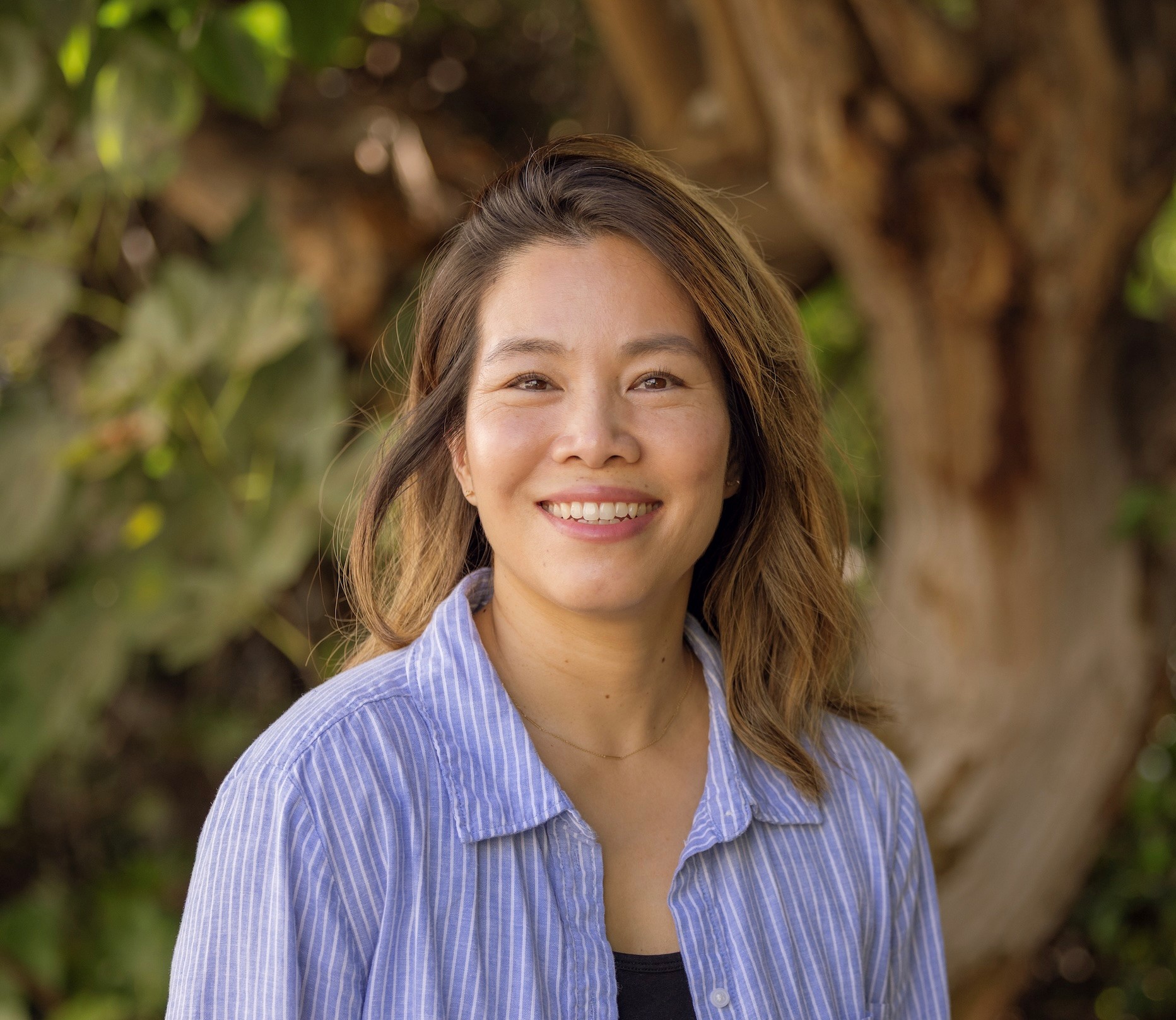
Author Jessica Chenfeng, PhD, LMFT (She/Her)
DMFT Program Chair, Fuller Theological Seminary
Director, Asian American Well-being Collaboratory
Associate Editor, Family Process
Co-author, Finding Your Voice as a Beginning Marriage and Family Therapist
Co-editor/author, Asian American Identities, Relationships and Post-Migration Legacies
REFERENCES
Almeida, R. V., Dolan-Del Vecchio, K., & Parker, L. (2008). Transformative family therapy: Just families in a just society. Allyn & Bacon.
American Association for Marriage and Family Therapy. (2022). Marriage and family therapist workforce study 2022. Family Therapy Magazine, 21(6). Retrieved from https://ftm.aamft.org/shifting-demographics-in-the-industry/
Berg, I.K. and Jaya, A. (1993).
Different and same: Family therapy with Asian-American families. Journal of Marital and Family Therapy, 19: 31-38. https://doi.org/10.1111/j.1752-0606.1993.tb00963.x
Berger, L. K., Zane, N., & Hwang, W. C. (2014). Therapist ethnicity and treatment orientation differences in multicultural counseling competencies. Asian American Journal of Psychology, 5(1), 53–65. https://doi.org/10.1037/a0036178
ChenFeng, J. (2018). Relational wellness for second-generation Asian American adult children. Presentation at California State University, Northridge.
ChenFeng, J. & Kim, L. (2024). Asian American identities, relationships and post-migration legacies: Reflections from marriage and family therapists. Routledge.
Cheung, C. & Jahn, S. (2017). Closing the acculturation gap. The Family Journal. 25. 170-178. 10.1177/1066480717697686.
Commission on Accreditation for Marriage and Family Therapy Education. (2022). Aggregated program demographic data. Retrieved from https://www.coamfte.org/COAMFTE/COAMFTE/Directory_of_Accredited_Programs/Program_Demographic_Data.aspx
Hardy, K. V. (1991). For minorities only: Tips for becoming a GEMM family therapist. Family Therapy News, 22(5), 5.
Ho, M. K. (1987). Family therapy with ethnic minorities. Sage Publications.
Lee, E. (2015). The making of Asian America: A history. Simon & Schuster.
McDowell, T., Knudson-Martin, C., & Bermudez, J. M. (2019). Third-order thinking in family therapy: Addressing social justice across family therapy practice. Family Process, 58(1), 9–22. https://doi.org/10.1111/famp.12371
Rastogi, M., & Wieling, E. (Eds.). (2005). Voices of color: First-person accounts of ethnic minority therapists. Sage Publications.
Sue, D. W., & Sue, D. (1981). Counseling the culturally different. John Wiley & Sons.
