
As more Americans live, work, and receive services across state lines, the demand for flexible, portable mental health care has never been higher. Yet licensure laws for Marriage and Family Therapists (MFTs) have been slow to keep pace with this reality. The result? Highly qualified therapists face cumbersome, unnecessary barriers when attempting to practice in more than one state — and clients feel the impact in reduced access to care.
Recent AAMFT research highlights the depth of this problem. In the 2025 MFT Industry Workforce Study, 72% of MFTs reported wanting a license in another state, but only 28% actually held one. And for those who tried to obtain additional licenses, 61% encountered significant challenges during the process. These obstacles not only limit practice mobility but also exacerbate workforce shortages in high-need regions and complicate care for clients who live or work across state lines.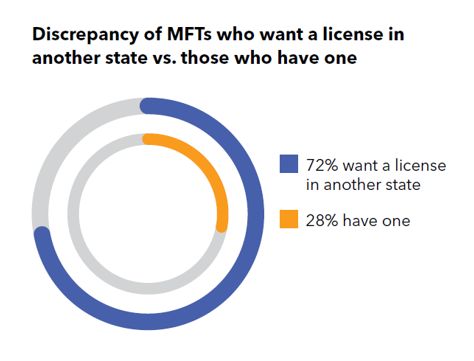
Access MFTs: A Targeted Solution Making Real Impact
To address these barriers, AAMFT launched the Access MFTs initiative — a strategic, state-by-state effort focused on streamlining licensure by endorsement. By collaborating with state legislators, licensing boards, and local associations, AAMFT is making it faster, fairer, and more accessible for MFTs to practice where they are most needed.
Virginia became the first state to implement Access MFTs legislation in July 2024. After updating regulations, online systems, and applications, the results were immediate and dramatic. As of August 2025:
- Licensure approvals increased by 246% compared to the same period before the legislation.
- Monthly applications tripled, jumping from an average of nine per month to nearly 30.
- MFTs report that previously difficult processes have become swift and straightforward — one LMFT shared:
“Once the new law went into effect [in Virginia], I applied on a Thursday and received my approval the following Monday. Before that, it felt almost impossible.”
Virginia’s success is not an outlier. As of summer 2025, Arizona, Arkansas, Connecticut, Georgia, Illinois, Iowa, Maryland, Nebraska, Nevada, North Carolina, Tennessee, and West Virginia have all passed Access MFTs legislation. Many are already beginning to see improvements in portability and access.
Other states, including Indiana, Kansas, Ohio, South Carolina, and Utah, have independently passed laws that reduce licensure barriers. States such as Florida and Delaware have advanced the cause by adopting telehealth policies that support practice across state lines.
Interested in more insights about the profession?
Over the coming months, Family Therap-eNews and AAMFT+ will highlight key insights from the 2025 MFT Workforce Study, examining trends shaping the future of the profession. You can access the full study, presented in two companion reports, at www.aamft.org/workforcestudy.
